Midmarket Borrowers Play Offense with Private Capital
KeyBank's Chris Picardi joins the podcast with the latest data on private capital usage
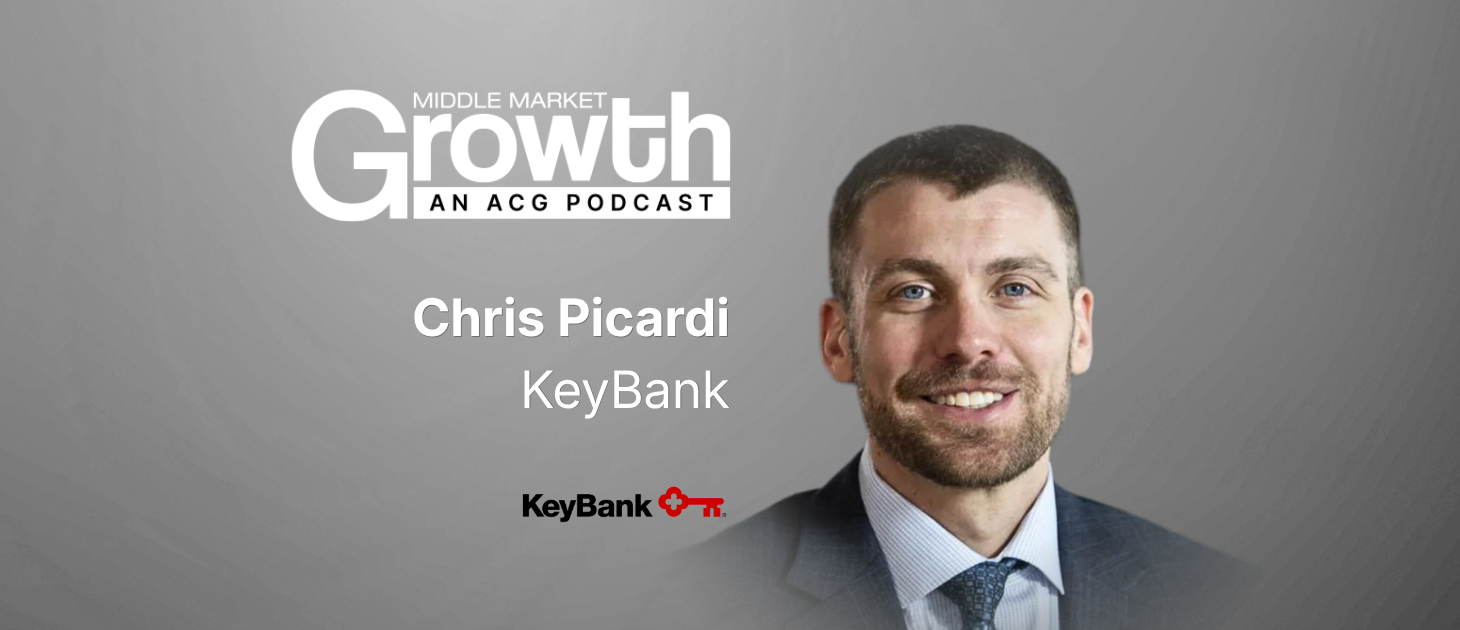
The middle market continues to face an uncertain and challenging environment, but new data from KeyBank’s Middle Market Snapshot survey reveals something surprising about midmarket borrowers’ use of private capital: It’s become an important lever for strategic growth, not just survival. KeyBank’s Chris Picardi joins the podcast in a conversation about more of the survey’s findings and considers how lenders can position themselves as partners that tailor the capital stack to businesses’ unique needs.
Read KeyBank’s full report: Middle Market Snapshot: How Private Capital Is Reshaping the Modern Capital Stack
This episode is brought to you by KeyBank. Learn more at key.com. All credit, loan, and leasing products are subject to collateral and/or credit approval terms, conditions, and availability and subject to change. This is for general information purposes only and does not consider the specific investment objectives, financial situation, and particular needs of any individual person or entity. Information included was prepared based on survey respondents’ answers, information from business leaders considered to be reliable, and an express disclaimer of warranty, express or implied, as to such information’s accuracy or completeness. KeyBank does not provide legal advice. 260608-4572578
Read a transcript of the podcast below.
Middle Market Growth: Welcome to ACG’s Middle Market Growth Podcast. I’m Carolyn Vallejo. Macro conditions have changed since the M&A heyday of the early 2020s, and these shifts are changing how middle-market companies are engaging with private capital. Here to share proprietary research and insights is key bank’s Chris Picardi. Chris, welcome to the podcast.
Chris Picardi: Thanks for having me.
MMG: Can you kick us off by telling us a little bit about your role at KeyBank?
CP: Yeah. I am Colorado Market President for KeyBank primarily responsible for leading our commercial banking team here in Colorado, where we support operating companies with revenue between $10 million and $1 billion. I also help co-lead our national middle-market private capital strategy, which includes sponsored finance and family office lending.
MMG: And just for a little bit of fun, what would you choose to be your walkout song?
CP: Oh, I’d have to go with “Inter Sandman” by Metallica. Probably seen that band more than 15 times live. It actually was one of my first concerts I ever attended.
MMG: Lots of high energy. I like it. Now, I want to talk to you today about a survey that KeyBank conducted on how private capital is being utilized by mid-market companies in the current macroeconomic environment. But before we get into the actual findings of the survey, tell me a little bit about why KeyBank conducted this survey. What was the motivation there? I mean, private capital is such a hot market today. It’s, it’s a really big topic of conversation. The market’s just exploded, but what, what’s kind of going on with the market and what’s going on with KeyBank that motivated you to conduct a survey in the first place?
CP: I think for us, private capital means a lot of things. It includes minority and majority private equity, but also equates to private credit. Private credit 10 years ago wasn’t even considered an asset class, and now you have hundreds of lenders out there deploying over $3 trillion in capital. So I think our general thesis is as a full service bank, there are ways to compete with private credit or there are ways to partner with private credit. So a lot of what we do is from a partnership mindset and how do we collaborate with this growing ecosystem of capital aggregators across a multitude of investment types.
MMG: Chris, can you give me kind of a visual of what this looks like in practice?
CP: Yeah, you bet. And you know, we work with a wide range of companies and a wide range of industry types. So as part of our selection process for picking our customers, I think it’s really important that we understand their current goals as well as their long-term goals. We operate in a highly regulated business, which means as much as we want to say yes to a lot of solutions, we can’t always say yes. So by partnering with, with private capital or private credit, in some instances, it allows us to flex our balance sheet creatively to help companies, you know, meet their longer term goals.
MMG: So there are a lot of findings in this survey, and I’m gonna wanna kind of zero in on a few as we talk today. But first, could you give me a high level overview of some of the key findings from the survey?
CP: Yeah, well, we actually started by surveying over 300 middle-market companies. So we surveyed all positions, CEOs, CFOs, owners, finance leaders, corporate developers across a revenue band between $25 (million) and $1 billion dollars. This hit across the entire continental U.S. and hit a wide range of industries. The goal for us was to understand how these companies were thinking about their capital decisions right now, what they value in partnership where there’s friction and how private capital is factoring into their growth plans. Overall, the middle market is engaging in private capital from a position of strength, not as a repair mechanism for their balance sheets. Nearly nine in 10 of our respondents are at some stage in evaluating or using private capital.
MMG: Chris, one thing I’m interested to know about the survey is what it found about what was driving the capital decisions for middle-market businesses. What can you tell me about that?
CP: Yeah very much an offensive response. You know, growth was the major driver within the overall survey respondents. You know, what we’ve seen in real time is a lot of companies have deferred CapEx for a number of years just based on an uncertain macro environment. We’ve seen this continued focus in terms of businesses improving or focusing on improving their internal operations, and that means investing in talent and systems. Technology and AI is another buzzword that we keep hearing a lot about, and companies are looking at those investments in terms of where, you know, technology or AI can support their overall operations. Interestingly enough, a lot of our businesses are focused on acquisitions. We’ve heard a lot in terms of the macro environment about the “silver tsunami” that’s expected to take place with roughly 40% of privately held businesses in the United States expected to go through a well transfer event of some kind in the next 10 years. So I think a lot of companies are looking at the way that they’re operating today, do they have the right capital solution in place? And starting to think about longer term exits or positioning our business to maximize value while supporting day-to-day earnings.
MMG: You know, you, you do of course mention that middle-market businesses are interested in for example, technology investments. AI is huge and we pretty much can’t have any conversation without mentioning AI. So I’m curious how much of this might be, you know, knee jerk, these businesses don’t want to get left behind and therefore are looking for capital to invest in AI technology. How much would you say businesses are thinking a bit more strategically and mindfully and, and long term about their AI and broader technology investments?
CP: Yeah, no, it’s a good question and I think we’re operating with kind of two schools of thought. One is AI is not gonna get any worse than it is today. So everything that we’ve heard about potential process improvements or enhancements for those business, I think middle-market leaders are looking at how they can adopt those and apply those in unique and specific ways to their business. Also think there’s a state of analysis paralysis. There’s so much change happening so quickly, there’s a lot of delay or consideration of, Hey, are we picking the right solution? So it’s really interesting. It is part of every single conversation that we have. I think very often as we’re, you know, getting to know companies, we’re starting to understand how they’re thinking about AI as they are considering future investments into their business. But many are paralyzed with fear of picking the wrong solution.
MMG: You mentioned the silver tsunami, and this has been a conversation for a couple years now. We are hearing a little bit from the market that there is this, this backlog and, you know, there are so many business owners that are hoping to retire, but maybe it’s not the right time. What are the kind of marketing conditions? What has to happen in order for that tsunami to actually be unleashed?
CP: Yeah, I think a lot of businesses are trying to figure out specific succession plans for their business. What we find is that companies are considering management buyouts, family succession in some form or fashion ESOPs, minority/majority recaps. So as we’ve talked, you know, there is an abundance of solutions. Each of them needs to be applied to the specific, you know, goals of that business overall. As we think about, you know, deal count and value, you know, backlogs for our middle-market investment banking business remain at kind of record levels, I think there is still, at what rate or at what valuation am I gonna sell my business at? I think there’s a lot of people who have friends within the industry who sold their business maybe within the last five years who saw peak valuations. And a lot of that had to do with availability of capital during that same period of time, immediately post COVID we saw rates rise nearly 500 basis points on the base rate. So total borrowing costs went up and there was an adjustment within the market in terms of maybe a multiple of EBITDA being used to, to help support these acquisitions to more of an interest coverage model. So if you could get five times leverage before COVID happened, but because base rate increased by 500 basis points, now you can only get three times leverage, your total valuation on your business may, may look different.
MMG: Yeah, that’s a great point. And that valuation gap we’ve been hearing again for years about how, how challenging that can be. And I imagine it especially challenging for founder-, family- owned businesses that, as you say, have a friend, they know someone, those valuations are peak, you know, 2021, 2022, and now it’s coming down. Are you seeing that valuation gap start to close? Are you seeing business owners start to kind of level out their, their expectations there?
CP: Yes and no. I think again, it does depend on the business and their longer term goals. I think very often what we’re seeing, especially in the lower end of the middle market, is these are often the times, the first time that they’re taking on institutional capital or an institutional partner. Very often we do see a lot of owners not doing 100% sales. They’re retaining a piece of their ownership and may play a role post partnership with a private equity group of some kind. And I think a lot of that has to do with, they can participate in the upside of the growth of bringing in this new partner and in essence get a second bite at the apple.
MMG: From the lender side, I’m curious, what are some of the traits that win deals for private lenders? What are middle-market companies looking for in a private capital partner?
CP: The field is really fragmented and no single attribute dominated partner selection, leverage industry expertise, cost and flexibility for future acquisitions, all cluster at the top. There’s no monolithic right answer industry or operating expertise is the most consistent factor. It’s the attribute most often ranked top three across the sample. Companies want partners who understand their business preferences. (It’s) split pretty sharply by sector: tech respondents price certainty and speed, industrials lean towards leverage and acquisition flexibility to platform and bolt-on, signature healthcare prioritizes flexibility for future acquisitions above everything else, each sector preferences encode its strategic playbook. I think one important note for capital providers, that means a single pitch won’t work across the board. The differentiation has to match the buyer’s posture. Generic positioning loses (to) the specific positioning every time.
MMG: Right. Certainly no one size fits all approach here. Turning back to the borrower, I am loving the optimism that the survey found. That’s wonderful, of course, but we can’t deny that there are challenging macroeconomic conditions. There is a lot of change in the market today, and that of course impacts the capital decisions that businesses make. What did the survey respondents say about the biggest macro factors impacting the timing and the structure of their capital deals?
CP: Yeah, I think the dominant response is adjustment when asked about macro. The largest cohort describes moderate impact. They’ve adjusted timing, structure, size of plans, outright pauses are generally rare. As you think about the last five years post COVID. We’ve really seen that play true. A lot of our middle-market companies have remained extremely durable. At the early innings of COVID, I think a lot of people spent a lot of time focusing on supply chains and understanding that the new normal seems to be operating in a state of (abnormal), you know, (a) meaningful share of our respondents, roughly one-in-six, say the environment is having an accelerating impact. They see opportunity where others see headwinds. Larger companies and tech firms feel the environment more acutely, no surprise, both report material impact at well above the overall rate. That makes sense. Bigger capital stacks have more rate exposure and tech is more sensitive to valuation compression
MMG: That this response certainly depends on, what the business is doing, what industry they’re in, et cetera. But when businesses are accessing capital, particularly in the context of m and a transactions, what are some of the most common points of friction that they’re encountering?
CP: Great question. I’d say the biggest delays are internal, not external. Internal alignment among owners and board members. Tied with diligence burden on internal teams. Rates is one of the top sources of friction. Lender behavior, inter creditor delays in market conditions, trail well behind. Nearly a quarter of respondents have reported no meaningful delays at all among experienced borrowers. The process has been engineered down. That cohort, particularly founder and family owned business with simpler governance structures, has gotten meaningful better at execution. CEOs report higher friction than other roles across the diligence. Load documentation delays, late term deals. CEOs feel the pain more than CFOs or corp dev teams. They sit at the intersection of every work stream. And executive bandwidth is a real diligence constraint broadly for middle market companies considering transaction. The practical takeaway is that capacity board alignment, internal diligence team bandwidth is often the bottleneck. The market will move at the speed of the company’s internal coordination, not at the speed of the lender.
MMG: Yeah. That timing, those delays that you mentioned, that’s a really interesting point. So kind of looking forward out a little bit, what did the survey reveal about potential future challenges or capital gaps that businesses are facing potentially even as a result of some of those delays?
CP: Yeah, I’d say the broadest is flexibility, not access or cost. The most commonly cited shortfall in current capital structures. It is limited to flexibility for growth initiatives. Capital is widely available, but assembling the right capital at the right moment with the right terms is the harder problem. Similar to the question before the gaps, you know, differ sharply based on ownership profile. Public companies feel flexibility constraints more acutely. Minority PE firms report governance misalignment at a rate three times higher than the baseline founder and family owned companies report. The highest satisfaction solutions need to match the structure looking forward. Stability talks the 12-month priority list, maintaining current capital structure leads to next year’s priorities with action oriented moves, clustering tightly behind it, the market is heading into a multi-pronged year, private credit alongside bank financing, PE partnerships, refinancing rather than a single dominant mode. The trade offs of working with private capital have shifted, experienced middle market leaders have made peace with ownership questions, loss of control ranks well below operational concerns. The active fight is on cost complexity and performance pressures. That’s a more mature conversation than what the market was having a few years ago.
MMG: Well, our longtime listeners of the podcast know that we love to close out many of our conversations by kind of bringing these insights down to earth and offering some actionable takeaways. So I would love to ask you, what are some of the biggest actionable insights, actionable takeaways that you could offer to private capital providers?
CP: Yeah, I think the most important one is, is partnership. You know, at the end of the day, we, we sell money, but we really view ourselves as capital partners, not capital providers. So leading with that partnership, I think unlocks a lot more than the capital itself. The most valuable outcome respondents site is the ability to accelerate growth velocity, not dollars. Capital is increasingly commoditized, but differentiated partnership is how a capital provider compresses timelines and unlocks momentum while providing strategic guidance along the way. CEO sits apart from the finance team and needs to be addressed differently. CEOs weigh access to non-traditional financing higher than other roles. They feel the constraints of bank only financing more acutely. They also report more friction across the deal process. The CEO is an underserved audience in, in private capital communications. Building relationships, I think is an important part of the front end of the funnel. Most respondents are in exploration or in early engagement, not a formal process. The pipelines over the next 12 to 24 months is forming now, and providers who build presence today will be in the room for those conversations longer term, and in the room for those conversations to build those partnerships.
MMG: That’s Chris Picardi from KeyBank. Chris, thank you again so much for joining the podcast.
CP: Thank you for having me.
This transcript was prepared by a transcription service. This version may not be in its final form and may be updated.
The Middle Market Growth podcast is produced by the Association for Corporate Growth. To hear more interviews with middle-market influencers, subscribe on Apple Podcasts, Spotify or Soundcloud.