Panelists Put the Future in Focus at ACG Chicago’s Annual Midwest Capital Connection
Held at Chicago's Navy Pier, ACG Chicago's Midwest Capital Connection facilitated nearly 4,000 meetings between attendees
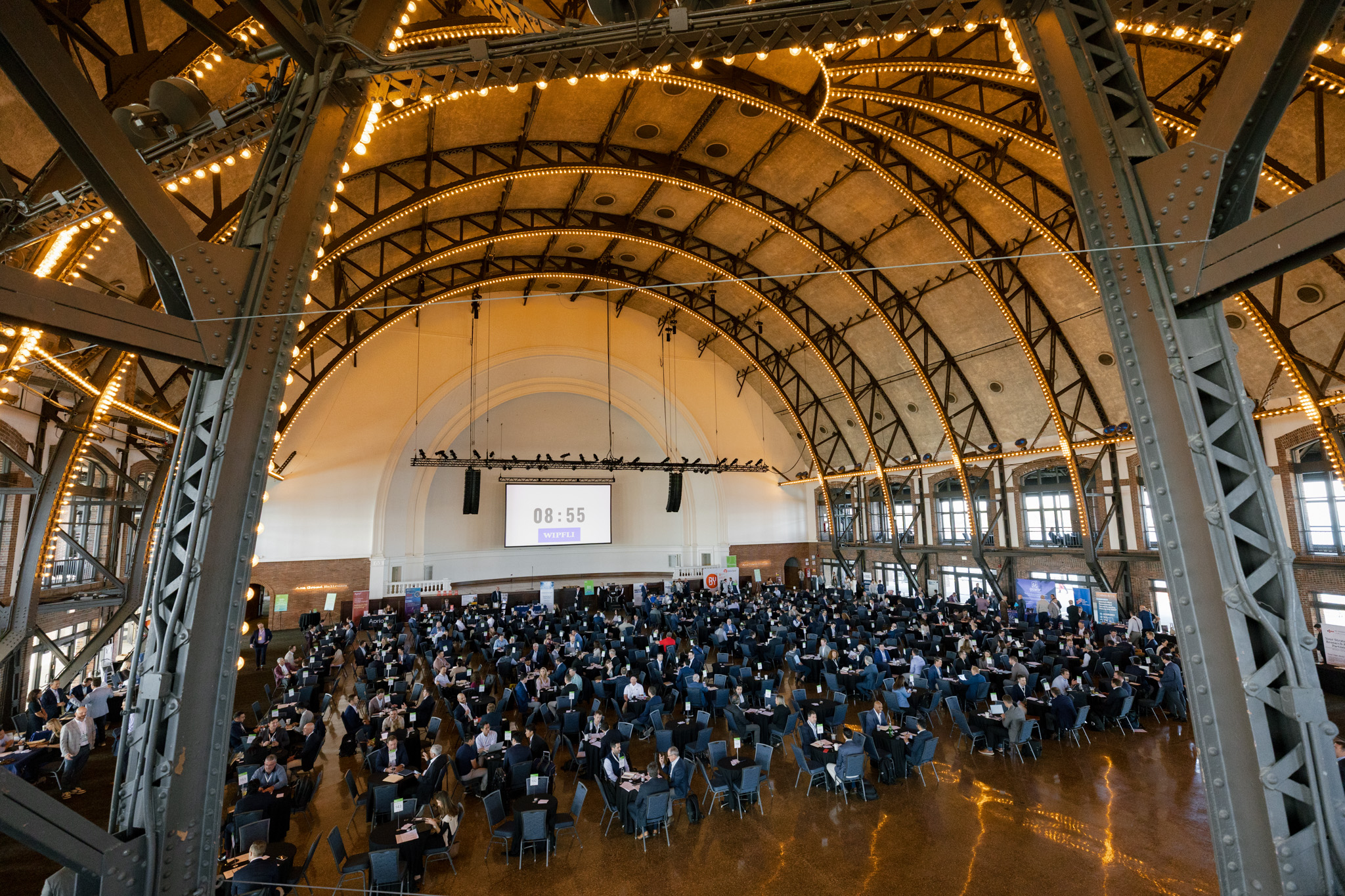
More than 800 middle-market M&A professionals gathered at Chicago’s Navy Pier on Oct. 7–8 for ACG Chicago’s annual Midwest Capital Connection, which featured high-impact networking, one-on-one meetings, and timely panel discussions.
Representing more than 120 investment banks and over 300 capital providers, attendees scheduled nearly 4,000 meetings throughout the event using the ACG Access scheduling software.
The event was hosted at Navy Pier, offering attendees from across the U.S., Canada, the U.K., and Spain the chance to meet, network, and listen in on panel discussions about today’s headline M&A topics. It all kicked off with an opening reception at the world’s largest rooftop venue, Offshore, with uninterrupted views of Chicago’s famed skyline and lakefront.
The program featured three panel sessions with spotlights on healthcare, manufacturing, and the state of dealmaking. The discussions yielded actionable insights into promising investment categories, operational considerations, and risks for dealmakers to watch heading into 2027.
Event Recap
WHAT: ACG Chicago’s Midwest Capital Connection
WHEN: Oct. 7–8, 2026
WHERE: Navy Pier, Chicago
THE TAKEAWAY: Technological innovation and geopolitical dynamics are reshaping the investment landscape, creating new opportunities alongside pitfalls.
Betting on the Future of Healthcare
The healthcare panel focused in part on where panelists see growth potential—and investment promise—in the future.
Panelists pointed to a range of cutting-edge healthcare technologies and new delivery models. They included AI-based tools that can help remove human intervention from healthcare; outpatient and ancillary diagnostic services that can offer earlier intervention; longevity-focused models; and healthcare delivery in space, a field known as bioastronautics.
A more immediate opportunity cited by one speaker is offshore back-office services for healthcare, which they called “one of the best businesses to be in.” Reimbursement pressure from government payers and restrictions on raising prices has made cost-cutting and automation a key focus for healthcare organizations, they added.
Operational Insight
During the manufacturing session, “Fact vs. Fiction: What’s Really Driving Global Manufacturing Investment,” the panel addressed the trend of reshoring.
Speakers concurred that relying solely on China as a manufacturing hub is no longer an option for businesses, and it’s not just large conglomerates that are diversifying their supply chains. Even medium-sized companies today are setting up multiple manufacturing facilities in Mexico and across Asia to avoid dependence on a single country, one panelist noted.
China became a popular manufacturing destination for its low-cost production, but business leaders are now weighing the benefits of cost savings against the risk of uncertainty, and they’re increasingly exploring near-shore production options. If they manufacture a product cheaply in China but can’t obtain it due to geopolitical factors or other disruptions, the lack of access negates the advantage of cheap production.
As one panelist noted, business leaders have shifted from asking, “Where’s the cheapest place I can make something?” to: “Where’s the cheapest place I can make it and sell it with certainty?”
Deal Mechanics
Dealmaking is evolving, too, and panelists discussed the current state of M&A and where the market is headed.
One speaker on the “Dealmakers Roundtable: An Unfiltered View of the Middle Market” panel cited an increase in creative solutions that buyers and sellers are using to get deals to close. Use of reps and warranties insurance has increased, too, rising from 50% of deals last year to 60% in 2026, the panelist noted.
A challenging exit market and lengthy private equity holding periods was a topic that spanned panels. Speakers on the healthcare session discussed the exit path for physician practice management (PPM) organizations, in particular. A popular investment strategy for years, many of these PPMs have now grown into sizeable organizations, raising the question: How will their owners exit?
IPOs may be an option for larger PPMs, and pension funds or insurance companies could be potential buyers, too. Lower middle-market PPM groups with $5 million to $15 million of EBITDA are still in high demand, the panel noted, while large PPMs with performance issues will struggle to find a buyer.
The event’s panels also talked generally about risks to completing M&A transactions. Tariffs present a significant challenge in the manufacturing sector, with one panelist recommending that dealmakers build in transaction time to account for the risk that the tariff regime shifts while a deal is underway.
Human risk was another cited by a panelist, who recommended spending more time evaluating the members of a management team in greater detail. “I think we get it wrong when we underspend on human due diligence,” they noted.
Speakers on the Dealmakers Roundtable also talked about artificial intelligence and its role in the deal process. One panelist pointed to the risk that AI poses to the fundamental work of M&A, including the research and analysis required to source and evaluate investments effectively. “There’s discipline to pulling together disparate info,” they said.
Although AI can produce materials that look slick, it can have the perverse effect of eroding decision-making capacity in junior professionals. They added, “I worry over time that you will subconsciously start to outsource your judgment, and younger people will lose that skillset.”
Midwest Capital Connection will return to Navy Pier in 2027.
Katie Maloney is ACG’s Vice President, Communications & Content.
ACG Insights is produced by the Association for Corporate Growth. To learn more about the organization and how to become a member, visit acg.org.